


Stay informed with our art news and market insights.
Investing in art requires a discerning eye and market knowledge, especially when navigating the dynamic world of emerging contemporary artists. This market segment represents the forefront of artistic innovation, even offering a glimpse into how the avant-garde artists of today will be assessed in the future. Understanding how to evaluate this art market sector is essential for any serious collector of Contemporary art.
This guide provides a structured approach on what to look for in emerging contemporary art to help identify promising talent and significant works. By examining key criteria, from the artist’s vision to their market presence, you can build a collection that is visually compelling and has the potential to increase significantly in value. There is no crystal ball for discovering tomorrow’s greats, but we believe our framework will help you make informed decisions in a field defined by constant change.
Despite all the recommendations we give below, it takes a brave soul to buy art for investment which you do not really understand or even particularly like. Emerging art presents challenges for collectors because the style and subject matter might be new and different but still, at Fine Art Brokers we believe there should be some appreciation for what you collect. Buying challenging art is in our opinion important. Anybody can buy paintings of pretty girls with parasols under a blossom tree. The great collectors buy art which challenges their eye and their sensibility.
Using an art advisor is especially helpful when evaluating emerging artists. Art advisors and fine art brokers can provide access, explanations, context, art historical comparisons, and also help negotoiate.
You should first seek to understand what drives the artist to create, as a strong artistic vision serves as the foundation for any significant body of work. This internal motivation and its implementation often separate fleeting trends from lasting contributions to the art world.
An artist’s statement provides a direct window into the creator’s intent and conceptual framework. It should clearly articulate the ideas, questions, or emotions that the work explores. These should be found on an artist’s website or available through an exhibition catalogue.
Look for consistency between what the artist writes and what is visible in the artwork. A disconnect here may indicate a lack of conceptual maturity or clarity. Also, many artist statements attempt to describe the indescribable and have meaningless statements written in purple prose and which try to encompass the impossible. Of course, many artists are not able to verbalize their intentions and so one must bear this in mind. A great painter is unlikely to be a great writer.
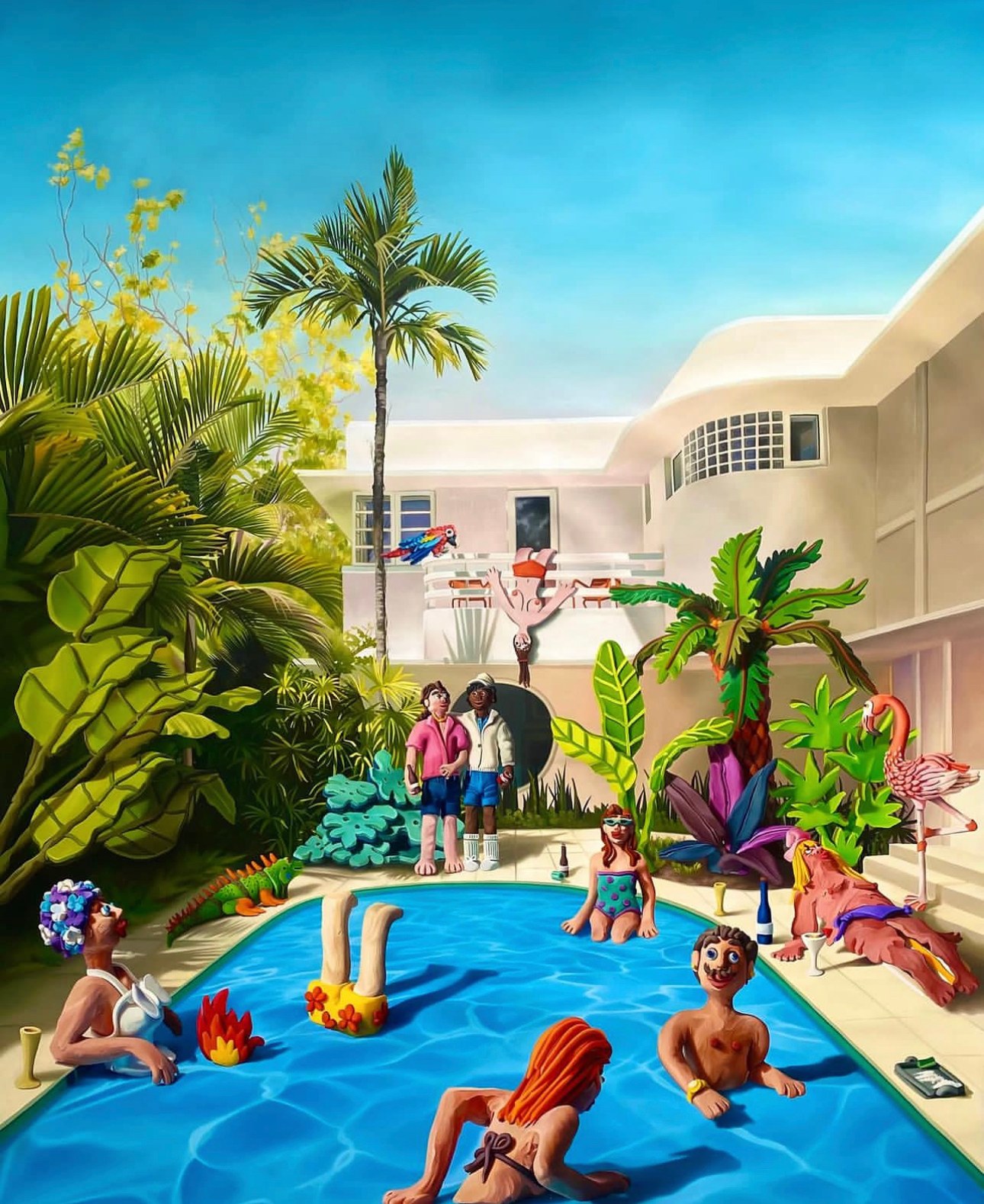
Natalia Ocerin Gomis, Miami Pool Party, 2023
Natalia Ocerin is a Spanish artist who has no problem articulating her aims and intentions. This ability will surely help her become a big success in our experts’ opinion. Her artist’s statement is informative: Click Here to view it. Natalia lives and works in London, with two Masters Degrees in Fine Art. Her body of work, which encompasses the painting above ‘Miami Pool Party’, involves Ocerin acting initially as a scenographer as she makes plasticine models and places them within a hand-built structure. She then paints the complete scene. She has participated in several individual and group exhibitions in Spain, London and Miami. She has an ambitious vision for her future and has amazing dexterity as a painter. She is an artist we would recommend.
Mature or mid-career artists rarely produce isolated, unrelated pieces. They typically explore specific themes or subjects in a particular style over an extended period. This is harder to identify in an emerging artist’s work, yet if a young artist has too much inconsistency of style and subject, one should be wary. Examine the artist’s portfolio to see if there is a cohesive thread tying the works together. This could manifest as a repeated motif, a consistent color palette and style, or a deepening exploration of a social issue. A committed engagement with a subject usually leads to more profound and resonant art.
This is a difficult topic to discuss in this context, as in many ways the concept of a contemporary artwork is as important as its execution. Almost any artist can be taught how to draw and paint realistically; what is important is interpretation, even a certain magic and originality which an artist imparts. But concept alone cannot sustain an artwork as you must assess the artist’s command over their chosen medium.
Pay close attention to how the artist handles their materials. Whether they work with oil paint, digital media, or sculpture, the application should show intention and control. Mastery of course does not mean the ability to depict naturalistically; it means the materials serve the artwork’s purpose.
Given the expense of materials, high-quality canvases and stretchers and paint for a painter – a sculptor has even higher costs - does not indicate their ability, more the size of their pockets and perhaps early success at sales. But do ask questions about the fabrication process, if the medium is unfamiliar. Understanding the “how” often deepens appreciation for the “what.”
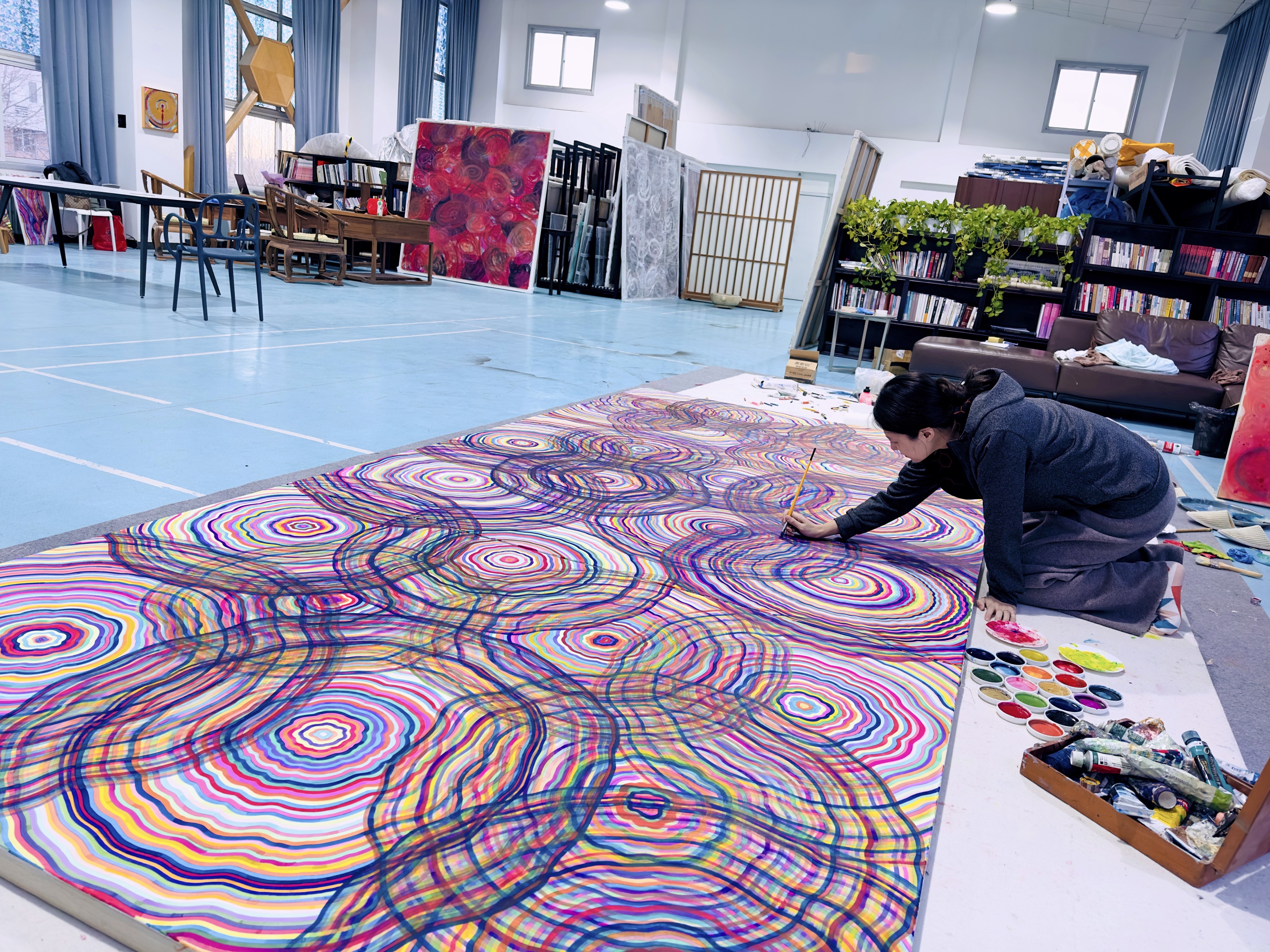
Ying Dai in her studio in Beijing.
A good example of an artist with an exceptional mastery over materials is Ying Dai, a highly creative multi-disciplinary Chinese artist. She works primarily with Chinese Rice paper and oil painting as her core medium, integrating Eastern and Western techniques, sometimes resulting in more than twenty layers of accumulated dyeing and painting. Dai is an established artist in China with museum shows, but she is ‘emerging’ in the West and she is another artist we recommend to collect as Fine Art Brokers believes her work has good investment potential.
Innovation distinguishes a good artist from a great one. But evaluating a new concept is hard. Also, appropriation is now a significant aspect of contemporary art and has been ever since Warhol started reproducing advertising images as ‘fine art’. Richard Prince took it to another level, simply reproducing other people’s work as his own. However, look for an approach that sets the work apart from contemporaries. This might involve a novel technique, an unusual combination of media, or a fresh perspective on a traditional subject.
While appropriation is an established aspect of contemporary art, it is best to avoid works that feel derivative or overly reliant on the styles of established masters. True innovation requires risk-taking and confidence to push boundaries. Emerging artists try to offer a visual language that feels distinctively their own to stand out.
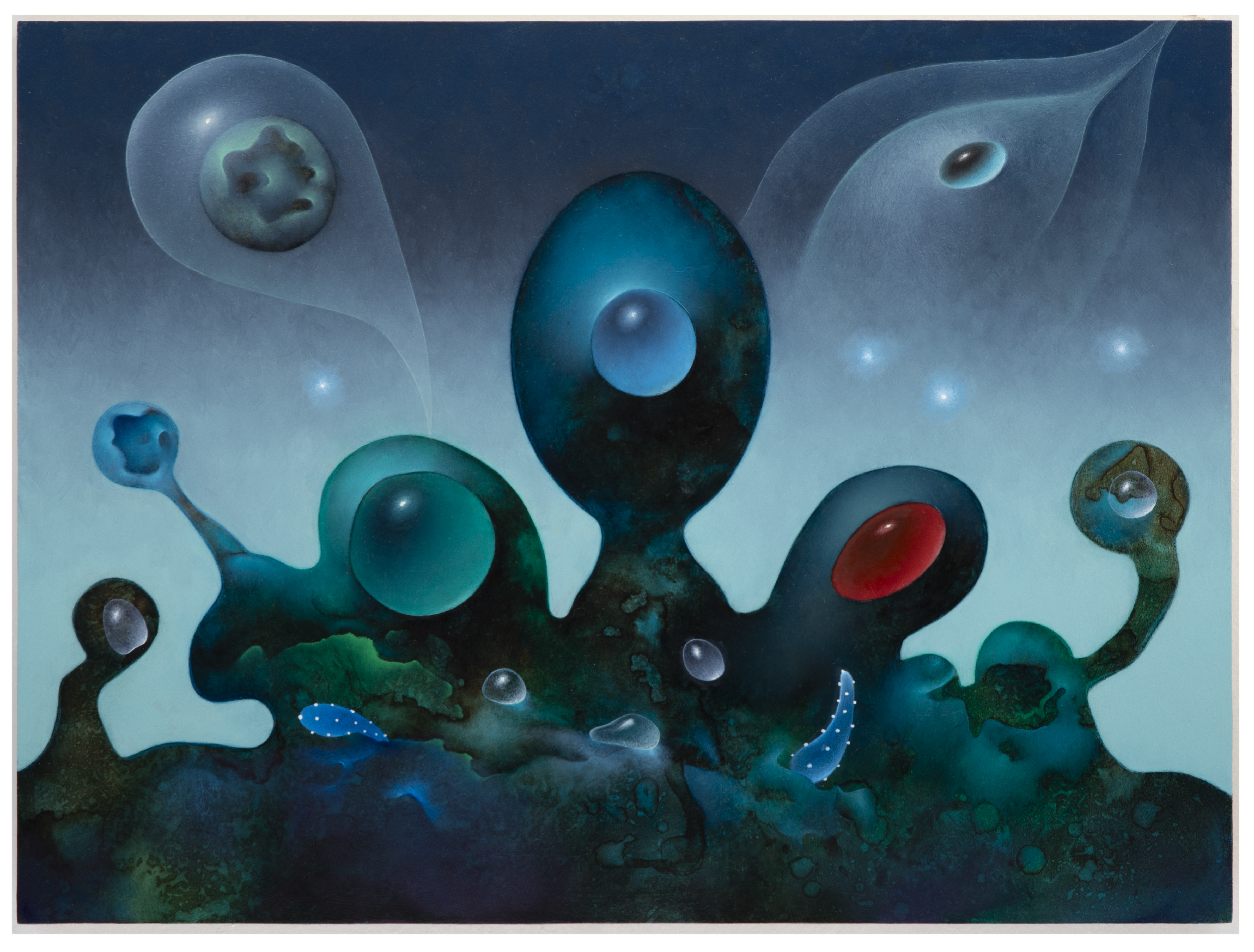
Alessandro Keegan, Nature Geist, 2023
Alessandro Keegan (born 1980) is a visual artist with an MFA in painting and drawing from The School of the Art Institute of Chicago and a MA in art history from Brooklyn College. His paintings and drawings, which depict forms that straddle the lines between science, nature, technology and mysticism, have been exhibited in New York, Chicago, Philadelphia, London, Dublin, Barcelona, and The Hague. Writings about his work have appeared in Artforum, Elephant Magazine, Masthead Magazine and Ephemera NYC. He stands out as an artist with a clearly defined visual language, producing surrealist works that challenge and expand creative boundaries.
External validation plays a very significant role in an artist’s career trajectory. Buying art by emerging artists or even art school graduates means you might get in before good gallery representation. But long-term art investment is often based on an artist having great representation by a dealer or gallery who will promote his or her work long-term. You can at least try to research how the art world might receive the artist. These enquiries will help to verify the artist’s current and future standing and potential for growth.
Representation by a reputable gallery serves as a strong seal of approval. Galleries invest their resources and reputation in artists they believe have lasting potential. Consistent participation in group shows or solo exhibitions indicates an active and growing career.
Critical recognition provides another layer of assurance for the collector. For an emerging artist, this might be simply awards at the art school. Look for artists who have received grants, residencies, or art prizes.
Reviews in respected art publications also signal that the artist is contributing to critical discourse. Even brief mentions in major press outlets can boost an artist’s visibility. This documentation helps build the provenance and historical record of the artwork.
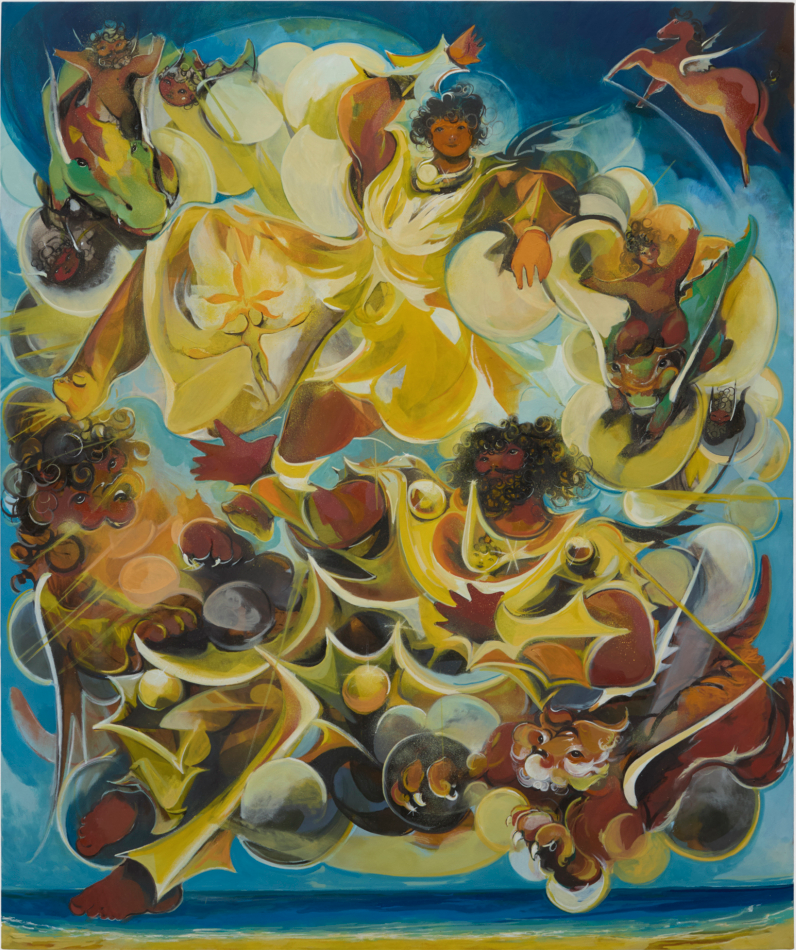
Asif Hoque, The One That Captured Sunshine, 2025
Another recommendation: Hoque was born in 1991 in Rome and is currently based in Brooklyn, New York. Hoque constructs richly imagined mythologies in his paintings, drawing from classical traditions of both Eastern and Western art histories. His luminous compositions are known for their ethereal glow and a rich palette. Examples of his awards and residencies include being selected as artist-in-residence at Silver Art Projects at the World Trade Center. His work is in the permanent collections of the Institute of Contemporary Art, Miami, FL, and the Xiao Hui Wang Art Museum, Suzhou, China
Investigate the pricing structure of the artist’s work overtime. A steady, gradual increase in price often indicates a healthy and sustainable market. Sudden spikes can sometimes signal speculation rather than genuine value growth.
Compare the prices with those of artists at similar career stages. This comparison helps determine if the work is priced fairly within the current market. Transparency in pricing builds trust between the collector and the primary market.
The presence of the artist’s work in prominent private or public collections is a positive indicator. When established collectors acquire an artist, it signals confidence in their future. Institutional acquisitions by museums are particularly prestigious and validating. You can often find this information in the artist’s CV or by asking the gallery director.
Navigating the landscape of emerging contemporary art can feel overwhelming without guidance. The sheer volume of artists and galleries makes it difficult to identify the true standouts. Professional advice often clarifies the difference between a decorative purchase and a serious acquisition.
Fine Art Brokers specializes in identifying high-potential emerging artists before they reach peak market value. Our team conducts rigorous due diligence on technical skill, critical reception, and market trajectory. Our art advisors help clients assess emerging artists’ work, recommend suitable artists, and follow up to ensure seamless communication. Collaborating with an expert grants you access to off-market opportunities and exclusive previews. It saves you time and protects you from common pitfalls in the primary market. We help to ensure that every addition to your collection meets the highest standards of quality and provenance.
We recently helped a new client, who had no prior knowledge of the art market, to navigate the complexities of building a meaningful art collection. Using our expertise and global contacts, we have negotiated on his behalf to secure 15 excellent works he likes by emerging artists whom we believe have a bright future. These artists include Murray Clarke, Mostafa Sarabi, Kyler Garrison, Tsai Yun-Ju, Jessica Canon among others.
Engaging with experts and staying informed about market trends further secures the value of your acquisitions. The most rewarding collections tell a story about the collector as much as the artists they support. By following these guidelines, you can navigate the emerging art market with confidence and sophistication.