


Stay informed with our art news and market insights.
Auctions obviously present a myriad of opportunities for every art collector and investor, but to buy well at auction requires insight, research, up to date art market knowledge, and also a bit of luck that competitors don’t bid.
Fine art auctions can certainly be intimidating for new collectors, both during the viewing preview and the auction itself. Seeing other viewers talk to experts with confidence and in a friendly manner can seem to put you at a disadvantage. And what do all the catalogue symbols mean. What are auction guarantees? Then the auction itself can be frightening, with phone bids and seemingly confident bidders.
Proper preparation and advice helps you understand value and market forces before you get a paddle number or enter a digital bid. It’s important to know how to avoid overpaying for artwork at an auction.
Fine Art Brokers helps collectors approach auctions with knowledge, art market insights and the confidence to bid the right amount for you. As experienced art auction consultants, we review value, condition, provenance, and bidding strategy before battle commences.
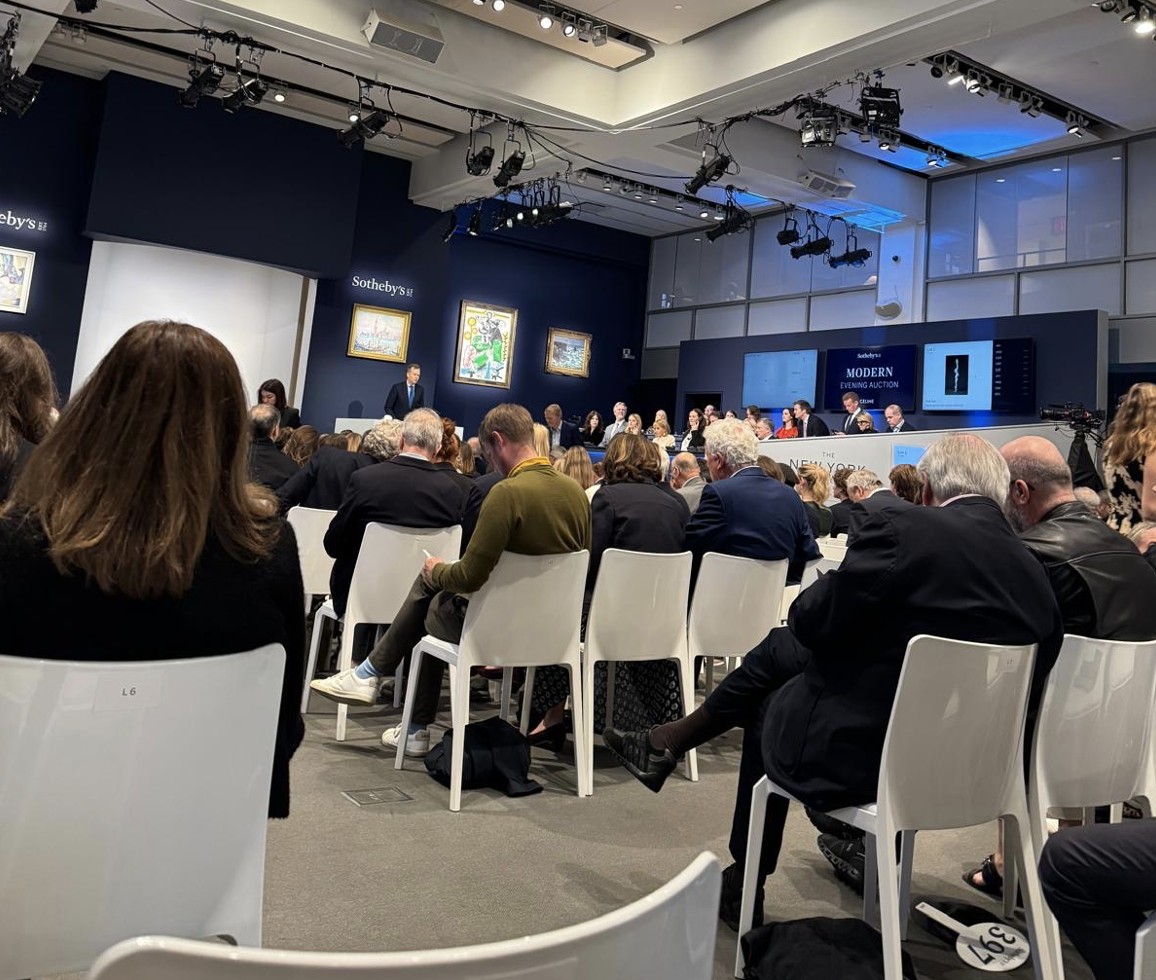
Image by Sandra Safta Waterhouse during a Modern Evening Auction at Sotheby’s NY.
An estimate reflects the auction house view of likely bidding interest. It can also reflect a strategy designed to attract more bidders; a low estimate may create momentum. A high estimate may signal confidence in demand, or it could reflect the demands of the seller. Neither figure should replace independent research.
While the estimate is the public declaration, the reserve is the price set by the seller, below which the piece cannot be sold. Typically, the reserve is about 10% below the low estimate but can be dropped if there is low interest. The reserve cannot, by law, be above the low estimate.
And be aware that the seller receives the hammer price less the seller’s commission - although in exceptional circumstances for high value lots the seller can negotiate 0% seller’s commission and even part of the buyer’s premium. As buyer’s premium is now about 28%, and the typical vendor commission is 10%, the differential between what the seller receives and what the buyer pays is usually about 38%.
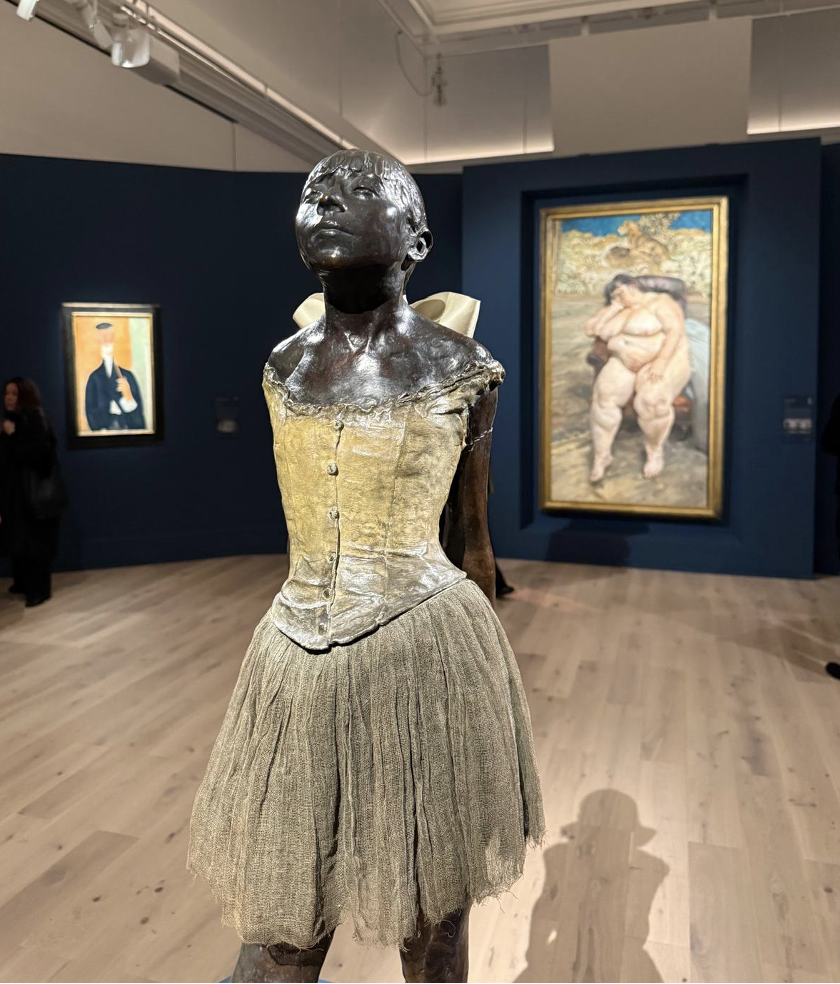
Edgar Degas’s Petite danseuse de quatorze ans which made 25,120,000 GBP at Sotheby’s London
on June 24th above its estimate of 18,000,000 - 25,000,000 GBP
Image by Ray Waterhouse during auction previews.
Comparable sales at auction give the clearest view of market range. One of the inefficiencies of the art market is that details of private sales are just that – private. Auction results show what buyers actually paid. Collectors should look beyond one sale result. A single strong price can distort expectations. A broader pattern gives better guidance.
Recent auction results matter most when market demand changes. Older results may still help when an artist has a stable market. The best comparable sales share core traits:
• Same artist
• Similar date
• Similar medium
• Similar dimensions
• Similar subject
• Comparable condition
• Similar provenance
• Comparable exhibition history
All these factors affect value. Many new collectors, quite understandably, don’t know how to assess this information and it truly does require expert art market knowledge. Paying an advisor a small commission can save collectors many thousands or millions of dollars.
Provenance shows the ownership history of a work. Strong provenance can support value and reduce uncertainty. A clear chain of ownership can increase buyer confidence. Gaps may pose questions about authenticity, title, or marketability.
Collectors should also review certificates, catalogue raisonné references, gallery labels, and exhibition records. These materials support an informed purchase.
Being part of a prestigious collection, not being sold too frequently, being shown at good museums and other factors are positive aspects to provenance. Also, a work with stronger documentation may sell at a higher level, and a work with gaps in history may deserve a lower bid ceiling. And paintings in European collections prior to WWII need to be checked for Nazi involvement.
Condition can change value in a major way. Beginner collectors often underestimate this point. Online auction catalogues often include condition reports. These reports can help identify restoration, fading, abrasions, tears, relining, or surface issues. But a buyer needs to be aware that the auction might have employed a ‘friendly’ conservator to conduct the report, so if in doubt we always advise getting an independent report.
A new collector is unlikely to understand many of the terms used in a detailed condition report. A specialist advisor can help.

Ray Waterhouse viewing "The Courtyard" (1946) by Philip Guston at Hauser and Wirth’s booth at Art Basel 2026
One would imagine that the big auctions especially wqould guarantee the authenticity of what they sell, but they have caveats. We recommend collectors check the established authority on the artist they are interested in, and if there is a certificate.
The hammer price does not represent the full cost. Auction buyers also pay a buyer’s premium. This is now typically 28%. Sales tax, resale tax rules, artist resale rights (in Europe). shipping, storage, insurance, and framing can add more expense. These costs can obviously significantly change the real purchase price.
A collector who bids $100,000 will pay $128,000 (assuming premium is 28%), plus sales tax and shipping and perhaps installation. If you are exporting your purchase to another country or state inform the auction before the auction to avoid being charged trax. Major auctions only allow recognized shippers to collect – and these are of course always expensive.
Before bidding, always calculate the all-in cost. Overpaying often happens when buyers focus only on the hammer price.
A clear maximum bid protects against emotional buying. It also helps collectors avoid competition that no longer makes financial sense.
The maximum bid must reflect research, accounting for market value, buyer’s premium, condition, provenance, and future resale prospects.
Once bidding begins, pressure can build quickly. A pre-set limit creates discipline. Fine Art Brokers can help establish a rational bid range before auction day. Our experts’ guidance can reduce the chance of overpaying during competitive bidding.
Auction houses create energy around strong lots. That energy can influence buyer decisions. A busy saleroom can make a work seem more desirable. Online competition can create the same effect.
Bidding momentum does not always equal investment quality. It may reflect short-term excitement. Collectors should separate personal interest from market logic. A work can have visual appeal without supporting an aggressive price. The best auction purchases combine quality, documentation, and disciplined valuation.
Artist markets move in cycles. Demand can rise after major exhibitions, museum acquisitions, or strong press coverage. However, demand can also soften. A collector should understand whether an artist has broad institutional support or short-term market attention.
Auction performance can vary by period. A mature work may sell better than an early work. A rare subject may outperform a common one.
Collectors should study buy-in rates as well. A buy-in occurs when a lot fails to sell. Frequent buy-ins can signal weak demand. Strong sell-through rates can suggest broader market support.
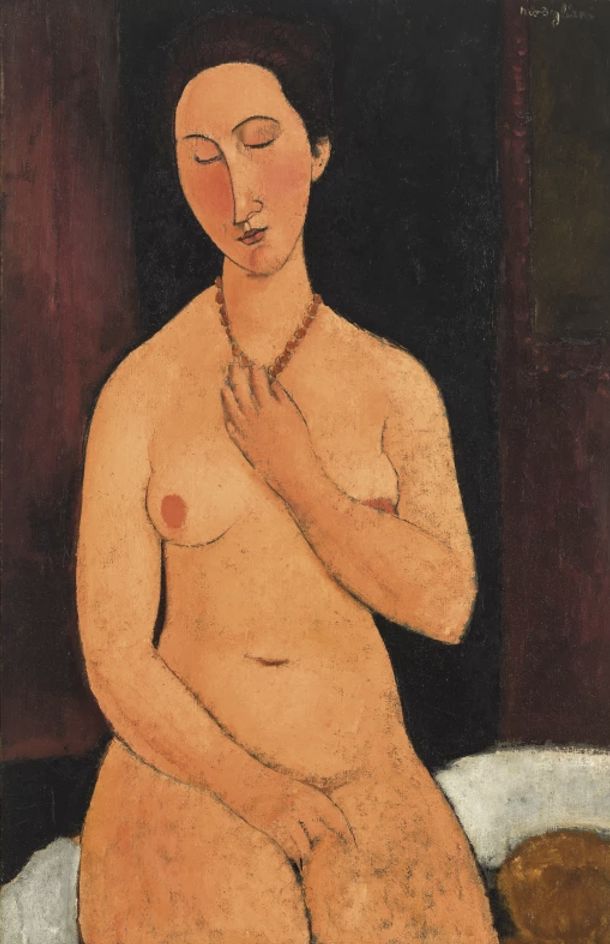
The star lot of the Lewis Sale at Sotheby’s was one of the most important works by Amedeo Modigliani ever to come to market: Nu assis au collier. The artwork sold to an Asian collector for £48.2 million ($63.9 million), the highest price ever achieved in Europe for the artist.
Not every work by a recognized artist carries equal value. Quality very definitely matters, thank goodness.
Collectors should consider composition, scale, date, materials, subject, and importance within the artist’s career. These factors can influence long-term desirability. A signature alone does not justify a premium. The work itself must support the price.
An experienced advisor can help compare a lot against stronger and weaker examples. That review can prevent a collector from paying top-market pricing for a mid-level work.
Some auction lots carry guarantees. A guarantee can affect bidding dynamics.
A guarantee means the seller has assurance that the lot will sell at a certain level. A third party may also hold a financial interest in the lot. Collectors should review catalogue symbols and sale terms. Auction houses disclose these details in the conditions of sale.
A strong auction purchase starts with purpose. A collector may buy for personal enjoyment, collection building, or investment potential. Each goal requires a different level of analysis. Investment-driven purchases need closer review of liquidity, demand, and resale history.
Beginner collectors should avoid buying only because a work appears affordable. Low pricing does not always mean value.
Fine Art Brokers guides collectors through buying decisions with long-term goals in mind. This support can help align auction activity with collection quality.
Auction specialists work for the auction house. Their role involves selling the work. Independent advisors focus on the buyer’s best interests.
An art auction consultant from Fine Art Brokers can review estimates, condition, provenance, comparable sales, and bidding strategy. This review gives collectors a more complete view before the sale.
Independent guidance can also help after a purchase. Advisors can assist with shipping, insurance, records, and future planning. For beginner collectors and investors, expert support can reduce risk. It can also make auction buying more efficient.
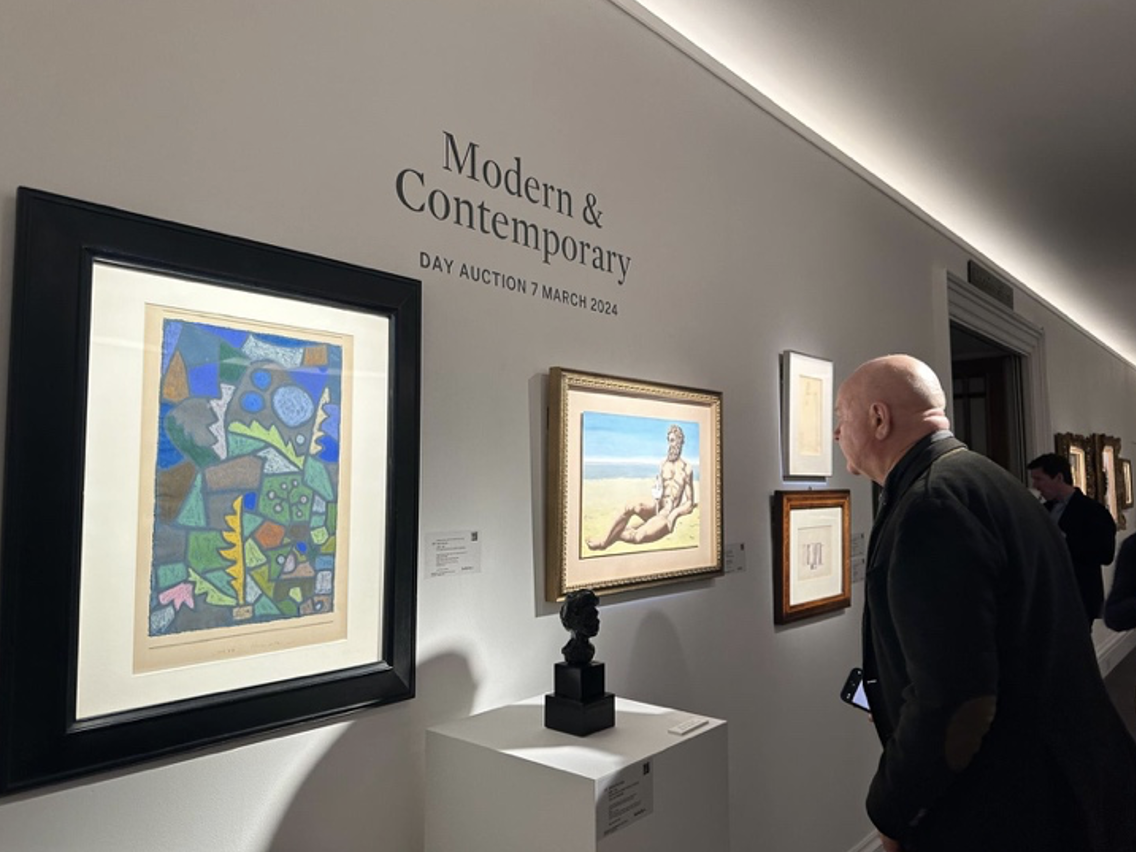
Ray Waterhouse at Sotheby's Modern & Contemporary Day Auction preview.
Avoiding overpayment at auction requires more than interest in a work. Collectors should review estimates, comparable sales, condition, provenance, fees, and market demand before bidding. Each step helps create a stronger purchase decision.
Fine Art Brokers offers expert guidance for collectors who want more confidence at auction. A consultation can help clarify value before bidding begins.