


Stay informed with our art news and market insights.

The majority of collectors sell artworks from their collection without expert advice. For pieces under $20,000 there is probably not much lost or gained. But selling art at a higher value usually benefits from the connections and specific market knowledge of an expert art advisor or broker. It is easy to understand why most private sellers choose the easy option of a local auction or gallery to sell their art, but this approach can often create pricing mistakes, weak negotiation and particularly limited buyer reach.
Finding the right professional art broker for you might not be easy, but if you do connect with one that aligns with your art and your goals, then whatever commission you pay is almost always worth it. Good guidance protects value and reduces avoidable mistakes. Continue reading for a closer look at why both beginner and veteran art collectors alike should use a broker instead of selling art directly.
Many private owners do not track current market conditions closely enough to price comparable works accurately. A direct seller may set the price too low and lose value or set it too high and drive away qualified buyers. Fine art pricing depends on artist momentum, medium, size, provenance, condition, subject matter, rarity, and recent comparable sales. A broker studies those variables before taking a work to market. That preparation helps position the artwork correctly and improves the chance of a serious offer.
Also, when a price is set by a fine art expert, it carries more weight with a buyer than one set by a collector unless the seller is very experienced.
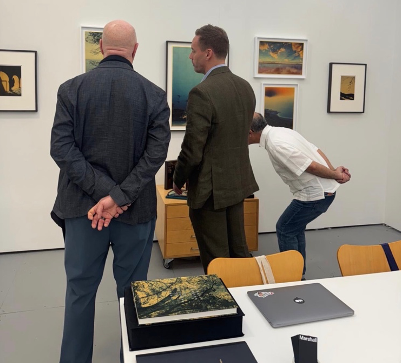
The FAB team travels to numerous international art fairs throughout the year, where we connect with dealers and clients on behalf of our clients to present their works for sale, while also closely studying the art market to determine the best time to sell.
The most crucial aspect of using a good art broker is his or her ability to find a buyer, through existing contacts or finding the right marketplace for your artwork. A direct sale depends on finding the right buyer at the right time. That challenge becomes harder when the work targets a narrow segment of collectors or investors.
There are various ways a broker can help you sell your art: a direct sale, a consignment to the best dealer in the field, placing it in an art fair, a consignment to the right auction, or putting it online on one of the platforms such as artsy. A broker brings access to existing relationships, private networks, and active buyers who already collect in the relevant category.
That reach matters in high-value transactions. Qualified buyers for important works rarely appear through broad public exposure alone. Private introductions often move better art more efficiently than open listings. That is one reason private art sales remain a core part of the high-end market. A broker can also place the work as discreetly or publicly as you wish.
Here is an example of how we recently helped a client: Last year, we were contacted by a Florida native living in Spain regarding a large art collection he had inherited from his father. The client was candid about his limited knowledge of the art market. After traveling to evaluate the collection in person, we prepared a detailed report outlining both the highly valuable works and those valued under $10,000.
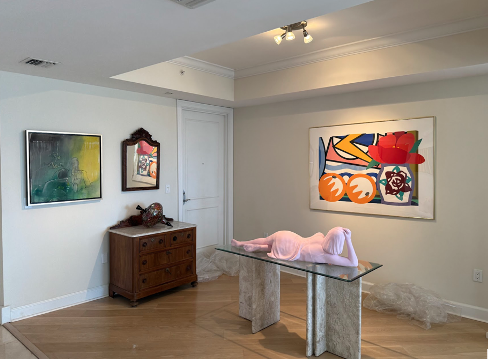
Image taken by the FAB team during art collection viewing & evaluation.
The FAB team coordinated every stage of the process, including insurance, transportation, photography, and market placement. Within a month, we successfully sold works by Joan Miró, Fernando Botero, and Alexander Calder. We also placed several works at art fairs, where pieces such as a Wesselmann sold successfully. Lesser-valued works will be strategically consigned to appropriate auction houses.
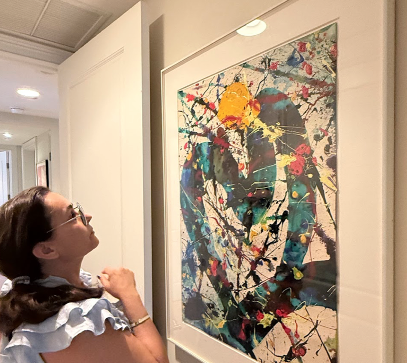
Sandra Safta Waterhouse viewing a Sam Francis work in our client’s home.
Collectors spending meaningful sums want confidence in both the artwork and the transaction. A weak presentation can raise doubts even when the piece itself has strong value.
A broker organizes the information that supports the sale. That may include provenance, exhibition history, literature references, condition details, and market context. Professional presentation also shapes the tone of the negotiation. Buyers tend to respond differently when the work enters the market through a knowledgeable intermediary rather than an unstructured direct listing.
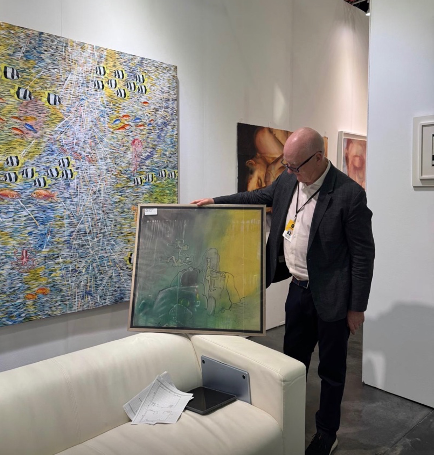
Ray Waterhouse presenting a client’s Roberto Matta painting at Art Palm Beach 2026.
Many direct sellers focus on the offer amount alone. Strong negotiation requires a wider view that includes timing, terms, contingencies, payment structure, transport, and closing conditions. A broker brings distance and discipline to those conversations. That separation helps avoid emotional decisions that can weaken the seller’s position.
Fine art transactions often involve subtle leverage points. A broker knows when to push, when to hold firm, and when a buyer’s objections reflect real concerns versus bargaining tactics.
Many collectors do not want a sale broadcast widely. Privacy concerns can involve personal security, estate planning, tax planning, family matters, or simple preference. Direct selling can expose more information than expected. Public listings may reveal ownership details, pricing intentions, or urgency. A broker can structure a more discreet process. That approach helps protect the seller’s identity while still reaching the right audience.
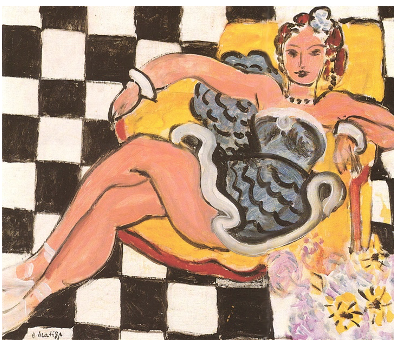
Fine Art Brokers built a very significant collection of Impressionist and early Modern paintings for a US client. During his lifetime we encouraged him to sell a painting by Matisse as the market had moved in his favor. Within 6 years he made a $14 million profit on that one painting.
After his death, his executors entrusted us with the sale of a few works, and we successfully sold discreetly paintings by Degasm, Renoir and others. We had an offer of $7.5 million on a Cezanne but the executors refused because they needed to be seen to achieve ‘fair market value’ by selling at auction. In the end the painting sold at auction for $5.5 million.
Interest does not equal readiness. Many direct sellers spend time with people who lack funds, lack authority to buy, or lack genuine intent.
A broker filters that noise. That screening saves time and keeps the process focused on qualified prospects.
Buyer vetting matters for more than convenience. It can reduce payment risk, limit failed transactions, and avoid needless disclosure to unqualified parties.
• Verification of buyer seriousness
• Review of financial capability
• Clear communication of terms
• Realistic timing for due diligence
• Secure handling of payment and transfer
Even strong works can encounter friction if paperwork is incomplete or condition issues emerge late. Direct sellers sometimes underestimate how quickly these issues can slow or derail a transaction.
A broker helps identify documentation gaps before buyers do. That review gives the seller time to address questions around condition reports, prior ownership, authenticity support, and related records.
In higher-value transactions, documentation often shapes confidence as much as the object itself. Buyers want clarity, and brokers help deliver it.
For example, last year a successful NYC interior designer contacted FAB to help sell certain pieces from her fabulous art collection. We managed every aspect of the sale, including creating condition reports, arranging professional photography cataloguing and art handling. Shortly after we were able to sell two pieces quickly and at good prices (in the $100,000 to $300,000 range.).

Sandra Safta Waterhouse viewing a Jacqueline Humphries painting.
Selling directly often leads owners to act on convenience instead of strategy. The best time to sell may depend on market demand, artist visibility, institutional attention, or collector appetite within a given segment.
A broker watches those signals closely. That insight can help determine whether to move quickly, hold for a stronger window, or position the work through a targeted private process.
Timing also affects buyer competition. When a broker introduces a work at the right moment, interest can deepen and terms can improve. A sale should reflect market opportunity, not just the owner’s initial impulse to transact.
Using a broker is not just about convenience. It is about controlling pricing, presentation, buyer access, negotiation, privacy, and risk at every stage of the sale.
That control matters because fine art is not a standard commodity. Each transaction carries its own market context and requires informed judgment.
Sophisticated sellers understand that a brokerage fee should be measured against the value preserved or created. In many cases, expert handling improves the final outcome enough to justify the cost several times over.
The question is not whether you can make a direct sale. The question is whether it can happen with the same level of protection, reach, and strategic precision. This is the simple answer to why you should use an art broker instead of selling directly.
A skillful broker can, in some circumstances, negotiate an advantageous donation. Fine Art Brokers achieved such as result with an important painting by Asher B Durand entitled ‘Progress’.

Asher B Durand, ‘Progress’, purchased for a client and then donated to a museum.
Fine Art Brokers has served collectors and sellers since 1996, offering professional guidance across buying, selling, auction services, and collections and estates. Our specialists support transactions across a broad range of categories and help protect sellers from avoidable mistakes in complex art market decisions.
For collectors, investors, and owners considering a sale, Fine Art Brokers offers the expertise, discretion, and market knowledge needed to navigate high-value transactions with confidence. Contact Fine Art Brokers to discuss a private sales strategy tailored to the artwork and the goals behind the sale.